Free and low-cost AAC options that are actually good
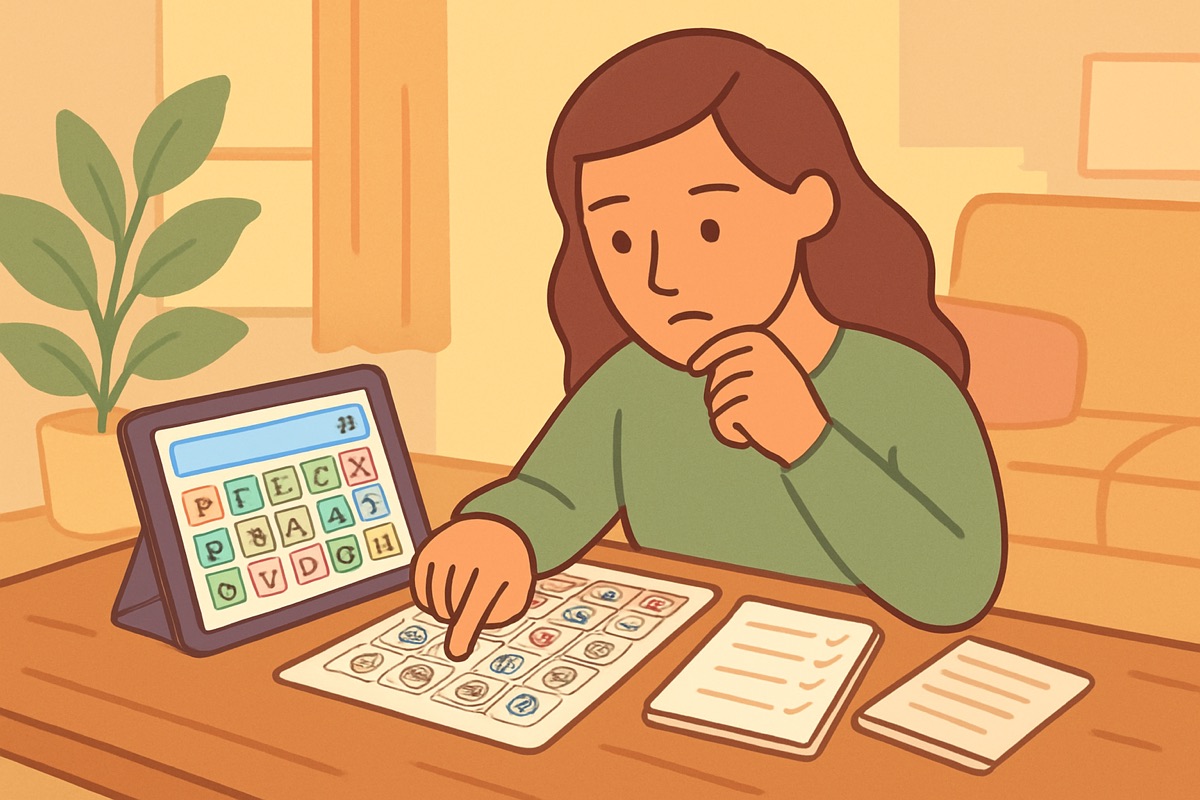
There’s a quiet cruelty in how AAC often gets presented: as if communication is a premium product, and a family that can’t clear the price of a device should wait until they can. It’s false. Some of the best first-year AAC costs nothing, and “free” done well beats “expensive” done late. Here’s the genuinely-good free tier of the AAC world.
Paper boards (free, and better than their reputation)
A printed communication board is real AAC — the same symbols, the same modeling, the same language learning as anything with a battery, minus the voice output. Paper is where many SLPs start even when budget is no object, because it’s fast to make, impossible to break, and works in the bathtub.
Free sources worth bookmarking:
- SpeakAnyWay’s free printable boards — classroom and home staples, print-ready.
- Project Core — free universal core boards from UNC’s Center for Literacy and Disability Studies, including versions for alternative access. Built by researchers, given away.
Print two copies, laminate one, and start modeling at the kitchen table tonight. That’s a complete, respectable AAC starting kit for the cost of toner.
Free app tiers (the real ones)
Apps put voices on boards, and several — ours included — have free levels that do real work. SpeakAnyWay’s free plan gets you a working board with voice output plus a free MySpeak ID (a scannable communication-and-safety profile), no credit card involved. Paid plans ($8–$20/month) add boards, AI credits, and communicator profiles when — if — you need them.
Evaluating any free tier, ours or anyone’s, comes down to one test: can your child say something real with it today? A free level that speaks is a tool. A free level that mostly demonstrates the paywall is a brochure. (The full buyer’s checklist has eight more questions like this.)
The hardware you already own
The tablet in the drawer — the slightly cracked one relegated to car rides — is probably AAC-capable right now. Voice-output AAC does not require new hardware for most touch-access kids. Charge it, add an app’s free tier, and you’ve assembled a speech-generating setup from household inventory.
Borrowed gear (free, and underused)
Every US state runs an assistive technology program with device lending libraries — borrow real AAC hardware for weeks, free, before anyone commits to anything. School districts and some clinics also run loaner pools. Ask your SLP or search your state’s AT act program; it’s among the best-kept open secrets in this world.
Where free ends, honestly
Free has edges. All-day voice output on rugged hardware, eye-gaze and switch access, insurance-funded devices — those cost real money, and when your child’s needs point there, spend, and use the funding routes. But that decision should be made from experience, not desperation: months of free paper-and-app usage tell you exactly what to buy, if anything.
Communication doesn’t wait for a budget line. Start free, start now, and let your child’s actual needs — not a price tag — decide what comes next.
Frequently asked questions
Is free AAC good enough, or is it just a stopgap until we can afford better?
For many children, well-used free tools are the intervention, not the waiting room — a modeled paper board beats an unused expensive device every time. Free becomes a stopgap only when your child's needs (voice output all day, alternative access) genuinely outgrow it; let that be the trigger to spend.
What's the catch with free app tiers?
Limits — usually on the number of boards, features, or voices. The test is whether the free level does something real for your child today. Judge each tier by what it does, not what it withholds.
Sources
This is lived experience and research, not medical advice — your SLP knows your child.