What AAC really costs in 2026 (and what it doesn't have to)
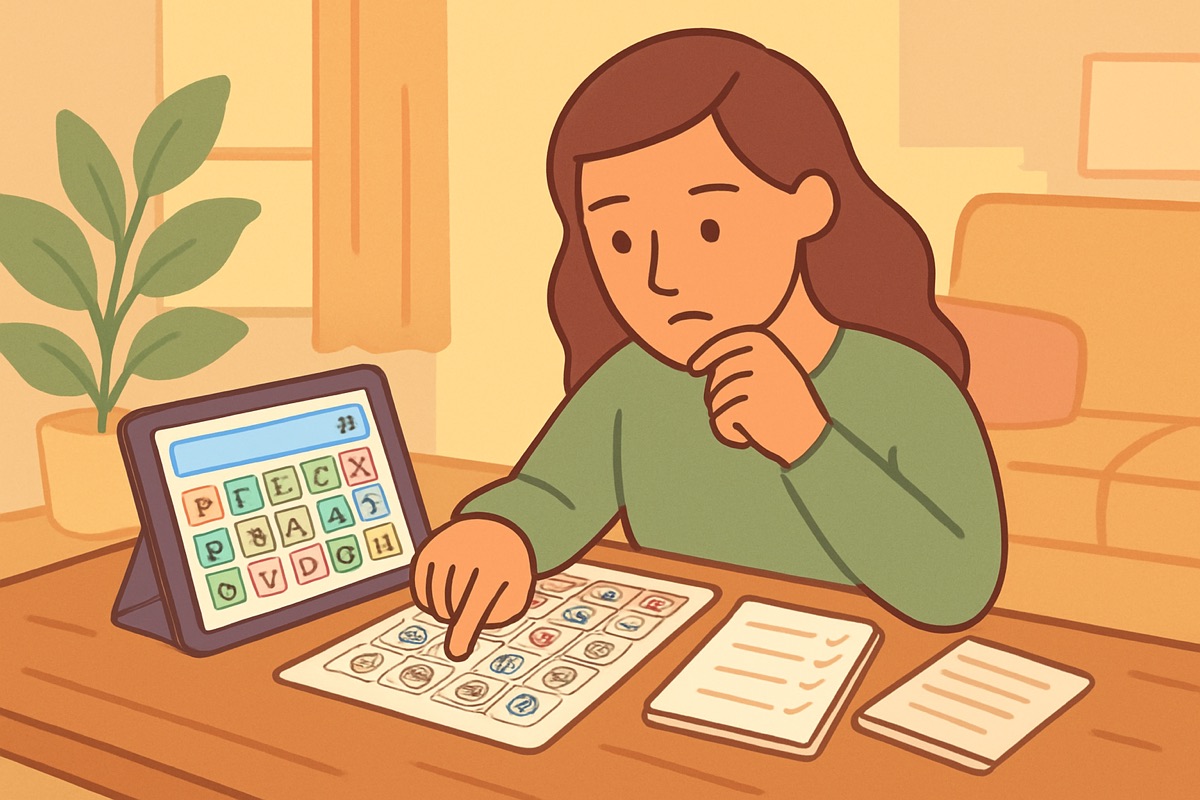
Ask what AAC costs and you’ll get answers from “free” to “more than our car.” All of them are true, because AAC spans everything from a laminated sheet of paper to insurance-billed medical hardware. Here’s the honest map — and the part vendors don’t lead with: the price of getting started has genuinely collapsed.
The cost tiers, plainly
Paper: free to pocket change. Printed communication boards cost laminate. They’re real AAC — not a consolation prize — and for early communicators they’re often the clinically recommended start. Every family should have paper boards regardless of what else they buy, because paper is the backup that never crashes.
Apps on hardware you already own: free to a few hundred a year. AAC apps range from free tiers through one-time purchases (historically anywhere from tens to a few hundred dollars) to monthly subscriptions. The tablet in your house is usually good enough to find out what your child needs. For the record, since this is our blog: SpeakAnyWay’s free plan includes a working board and voice output — $0 to find out if this clicks — and paid plans run $8 to $20 a month.
Dedicated speech-generating devices: often thousands of dollars. Purpose-built hardware from the established device companies typically runs well into four figures before funding. That price buys real things: ruggedness, mounting options, eye-gaze and switch access, warranties, vendor support. Whether your child needs those things is the actual question — the app-vs-device tradeoffs get their own post.
Who pays, when it’s not you
For dedicated devices, there are established funding routes — this is why the sticker price isn’t the whole story:
- Insurance and Medicaid fund speech-generating devices when an SLP evaluation documents medical necessity. Slow, paperwork-heavy, and real — SLPs run this process every year and yours will know the local terrain.
- Schools must provide assistive technology named in an IEP — at school. (School-owned devices sometimes can’t come home; ask early.)
- State AT programs and nonprofits offer device loans and grants — useful for trying hardware before anyone commits.
The catch across all funding routes is time — months, commonly. Which is exactly why the free-to-cheap tier matters: it’s not just a budget option, it’s what your child communicates with while the paperwork crawls.
What it doesn’t have to cost
The old model held communication hostage to a four-figure purchase: no device, no voice. That model is dead. A family can now start with printed boards and a free app tier this afternoon, learn what actually fits their child, and make any bigger purchase later — informed by months of real usage instead of a showroom demo.
So spend if your child’s needs call for it, pursue funding aggressively — but don’t let anyone tell you communication starts at $4,000. It starts at zero, today, and every dollar after that should be buying something your child demonstrably needs.
Frequently asked questions
Why are dedicated AAC devices so expensive?
You're paying for durable purpose-built hardware, included support and warranties, and a medical-equipment channel built around insurance billing. Those are real things — the question is whether your child needs them, not whether the price is a scam.
Is free AAC ever actually good, or is it always bait?
Paper boards are free and clinically respectable. Free app tiers vary: judge them by whether the free level does something real. A free tier that lets you build and speak from a board today is a tool; one that only shows you what you'd get for money is an ad.
Sources
This is lived experience and research, not medical advice — your SLP knows your child.