One communicator. Built together, owned by the family.
A communicator can start with a therapist and end up fully in a parent's hands — with no setup lost, no paywall at the moment that matters, and the therapist still there to help. Here's the whole journey.
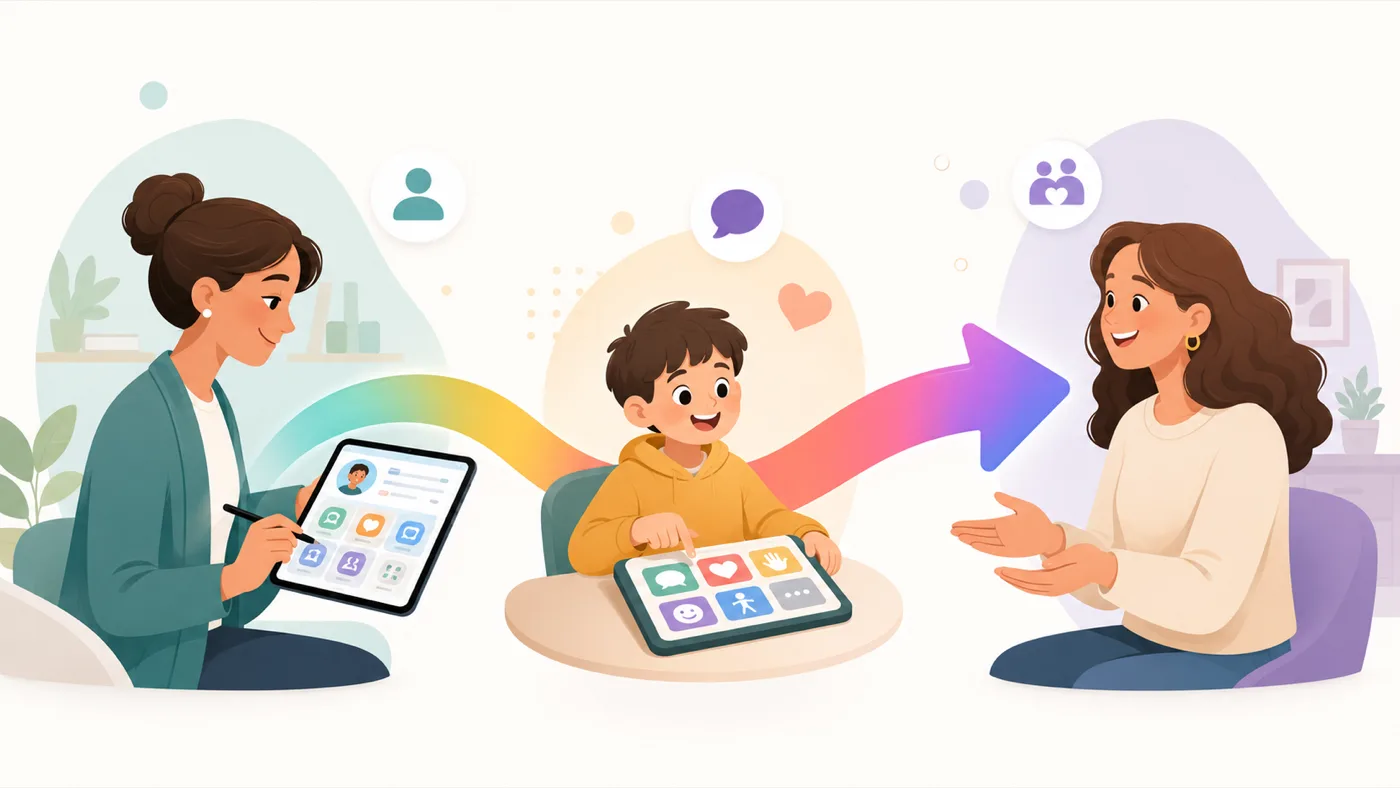
Three stages, start to finish
The same communicator moves through three states. Nothing gets rebuilt along the way — the boards, the voice, and the history all carry over.
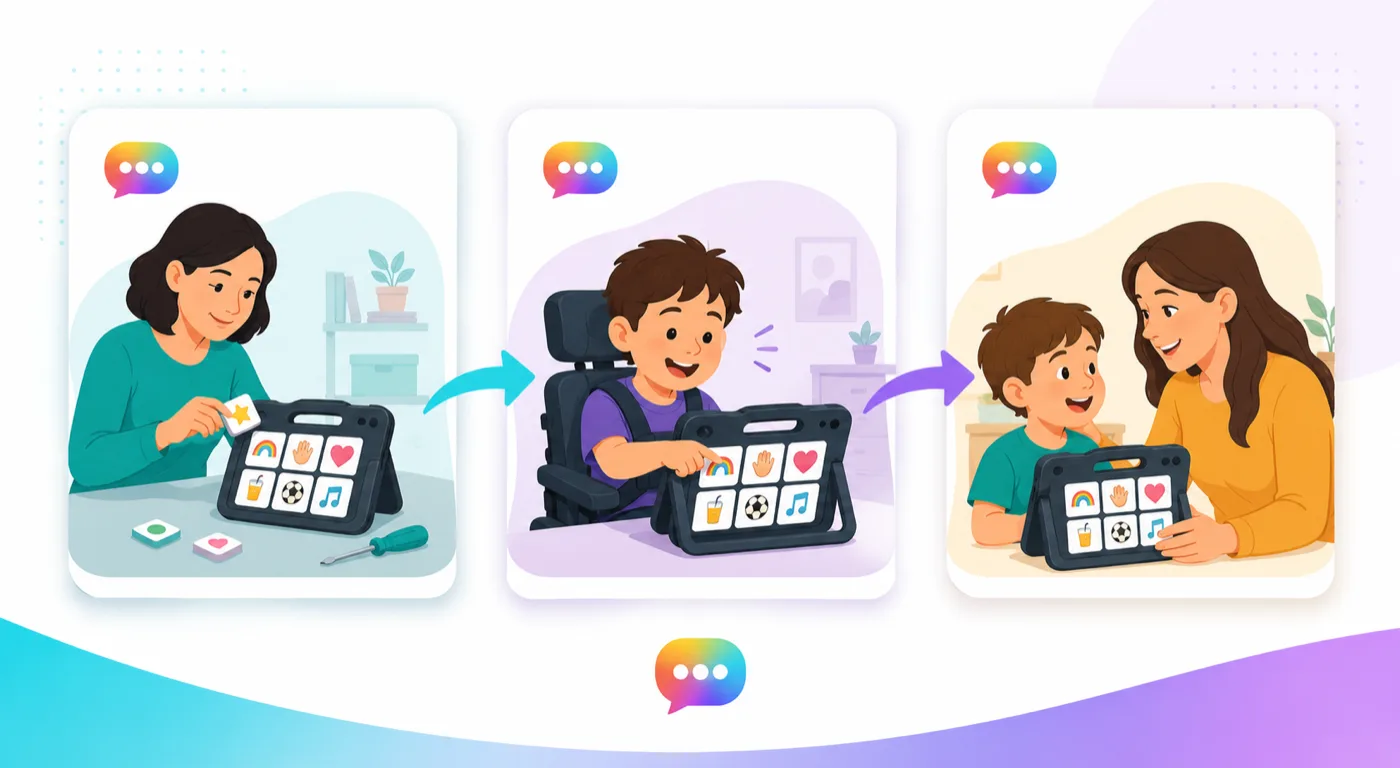
A therapist sets it up
In a session, an SLP spins up a communicator to trial layouts and model language. It's a private scratch space — no login yet, nothing to pay for.
Therapist creates itIt goes live for the child
Once the setup works, the communicator gets a real login and full boards so the child can use it — on a device, at the table, sent home to practice. It now sits in one of the therapist's slots.
Child uses it · shared by the therapistThe family makes it their own
The therapist sends a claim link — "make this account your own." The parent clicks, creates their account, and the communicator transfers to them: login, history, profile, and boards intact. Claiming is always free for the family's first communicator.
Parent owns it · therapist's slot frees upWhat if the family isn't ready yet?
The handoff happens whenever it's right for the family — there's no pressure and nothing gets stranded either way.
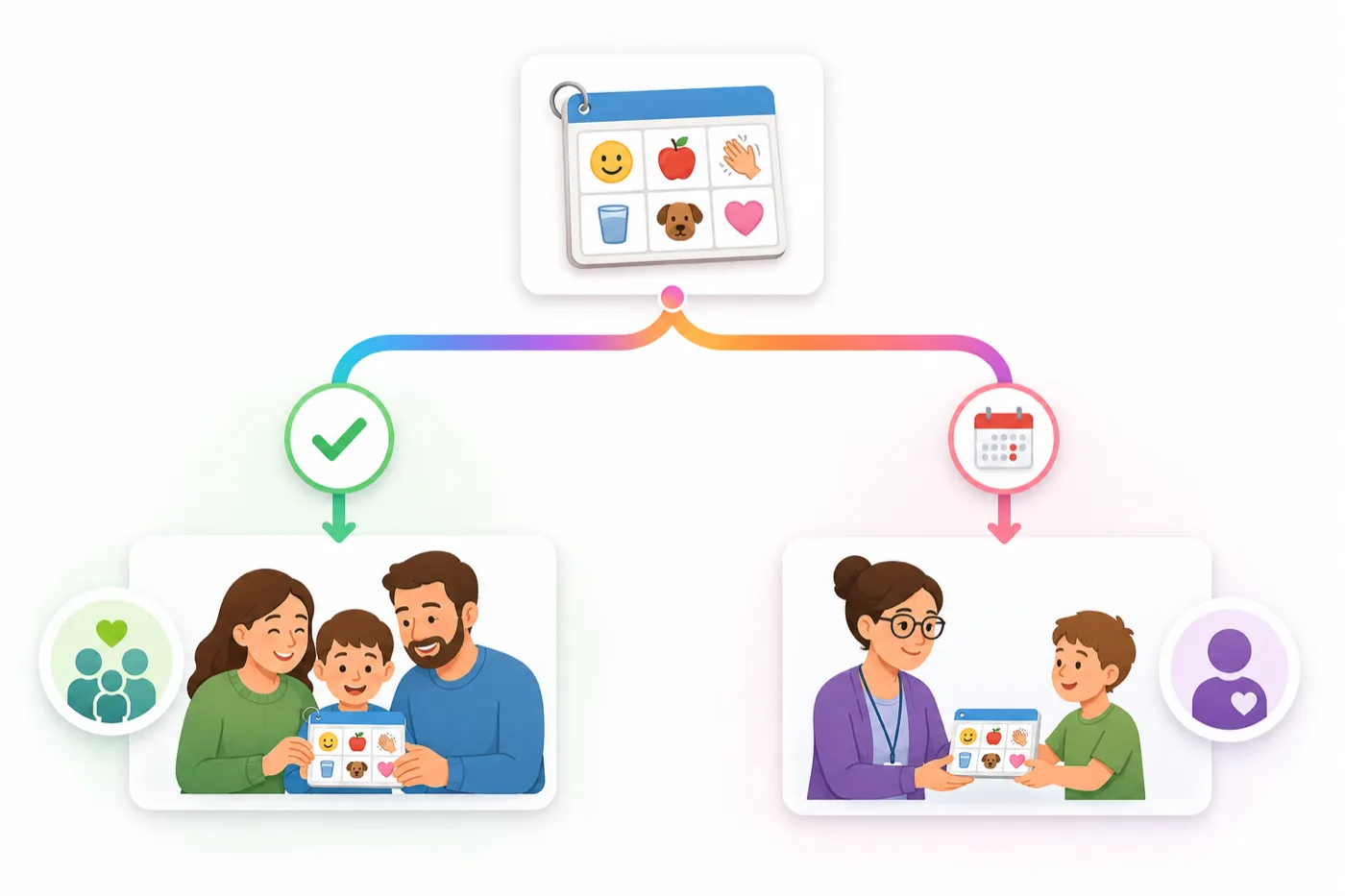
After a communicator is on loan, one of two things happens →
The family takes over
Ownership transfers to the parent. The therapist's slot frees up so she can help the next family — and she stays on the team as a supervisor to keep sharing boards and cheering them on.
The parent decides everything from here, and can keep the therapist on for as long as she's helpful.
The loan simply ends
If the family never claims — or the therapist ends the loan — the communicator returns to the therapist's space and the slot comes back.
Nothing is lost. The therapist is free to onboard the next family whenever she's ready.
When the professional arrives second
Often it goes the other way round: a student transfers in already using SpeakAnyWay, set up by their family, and the SLP or teacher at school has to work with what is already there. That is the common case, not the exception.
The family adds you to the communicator's team. You get your own sign-in on the boards they already use at home — nobody shares a password, nothing forks into a second school copy, and they can remove you whenever they like. You do not need an account first; the invite arrives by email.
After the family claims it
Here's exactly who can do what — no surprises.
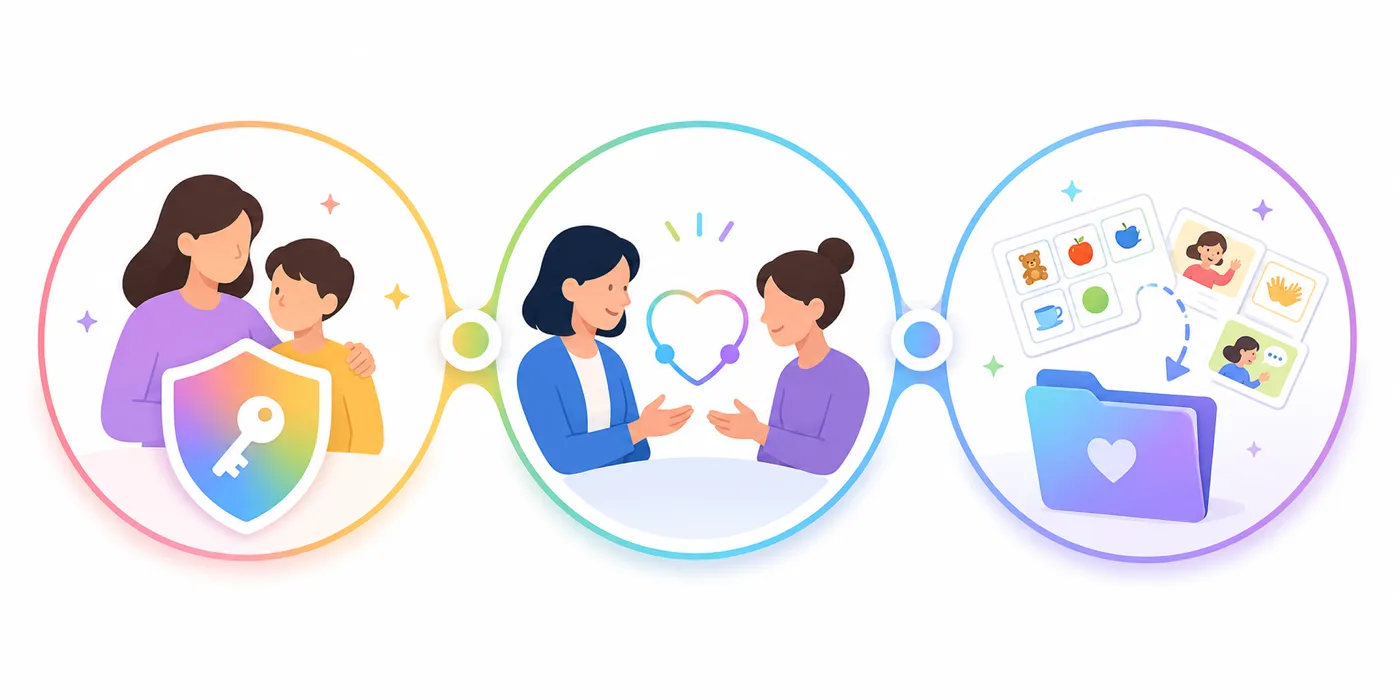
The parent owns it
The name, sign-in, voice, layout, safety info, and who's on the team — all parent-controlled. It's fully theirs.
The therapist still helps
She stays on the team to share new boards and message the family. She can't change the communicator's identity or safety details — those are the family's.
The family is never stranded
The parent decides when the therapist steps away. When she does, the boards she shared are copied into the family's own library so nothing disappears.
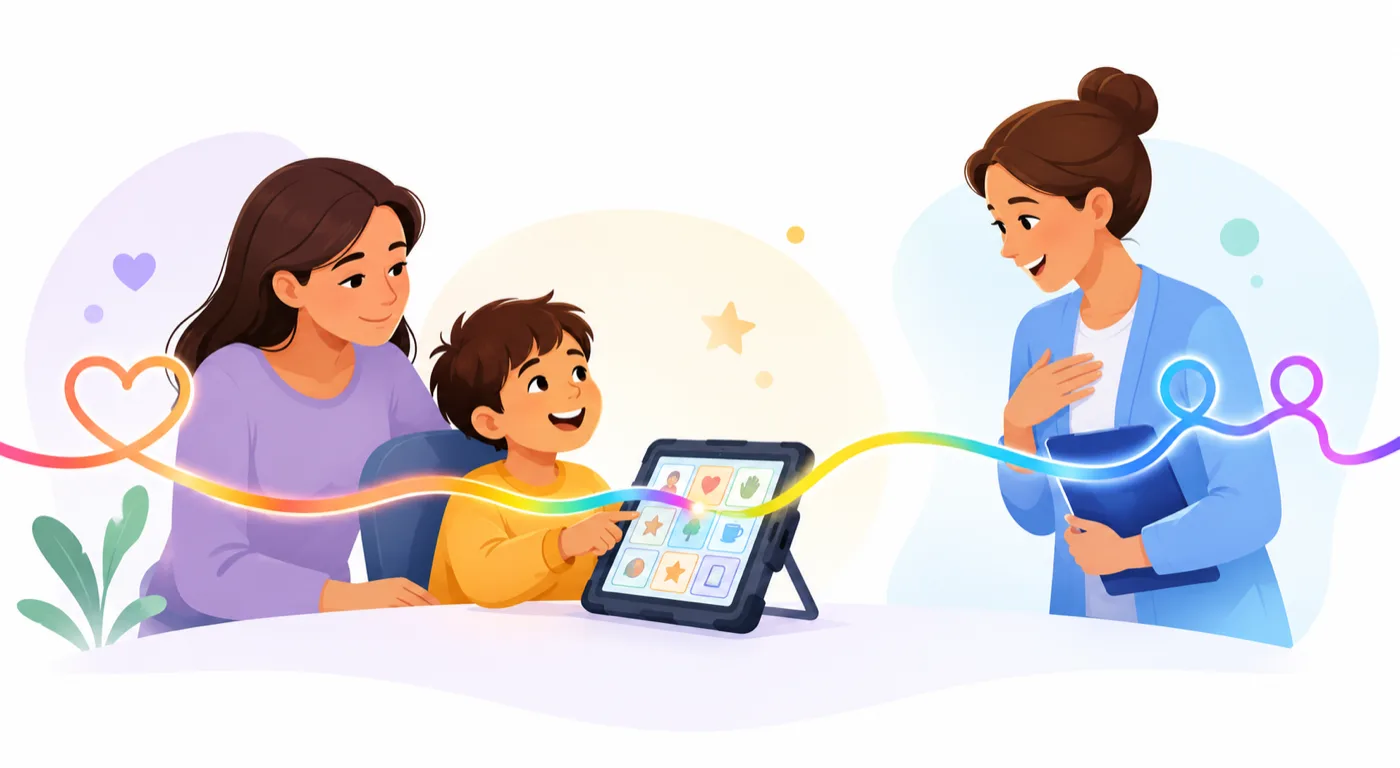
Communication that travels with the child
Whether you're a parent getting started or a therapist building for a family, SpeakAnyWay keeps the work in one place — and in the right hands.