Turn a restaurant menu into an AAC board (yes, from a photo)
There’s a small moment at every restaurant that most families never think about: the server looks at your child and asks, “And what would you like?” For a nonspeaking child, that moment usually gets handled around them — a parent answers, the server nods, the menu closes. Functional. But it’s a tiny theft, repeated for years: the experience of ordering your own food.
Here’s a way to hand that moment back, and it takes about two minutes in the parking lot.
The move: photo → board
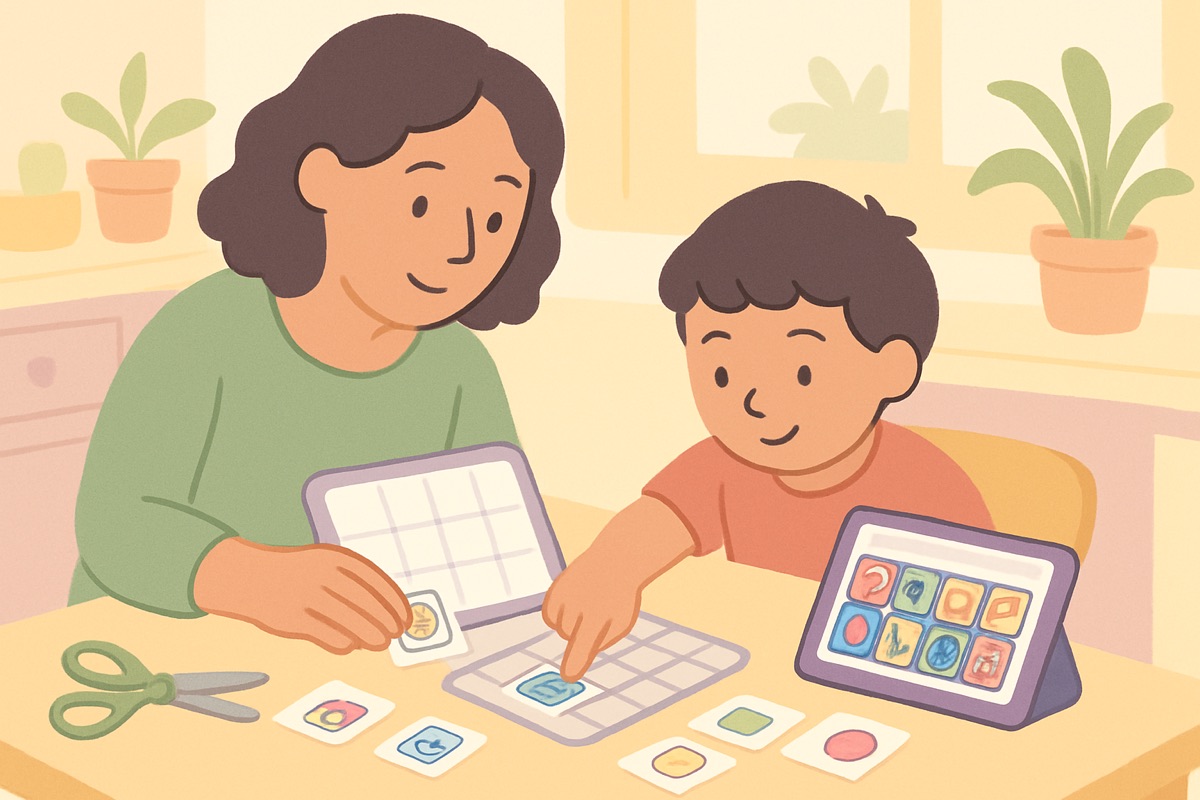
This is exactly the kind of thing modern AAC tools can automate. In SpeakAnyWay, you snap a photo of the menu (or the menu board on the wall), and the AI turns what it reads into a communication board — the kids’ quesadilla, the mac and cheese, the lemonade — each as a tappable symbol your child can use to order out loud.
Give it a quick edit before handing it over: delete the fried-calamari clutter, keep the six things your child might actually want, make sure the drink they always get is on there. Curation beats completeness — a board of realistic choices is faster for your child to scan and easier to succeed with.
No smartphone menu magic available? The light-tech version has worked for decades: point-to-the-menu. Circle a few options with your finger, ask “this one or this one?”, and let your child point. The technology is a convenience; the principle — your order, your choice, your voice — is the whole point.
Making the moment land
- Prep the choice before the server arrives. Let your child browse the board while everyone else browses menus. Deciding under a stranger’s gaze is hard for anyone.
- Cue the server, lightly. “He’ll order with his tablet.” Then wait. Let the tap-and-voice do it, and resist re-saying the order unless genuinely needed — the ordering belongs to your child.
- Keep the regular words reachable too. Mid-meal needs — more, help, bathroom, all done — live on your everyday board. The menu board is the guest star, not the replacement.
- Expect an off-script tap. Your child may order the milkshake you didn’t pre-approve. Congratulations: that’s self-advocacy. Negotiate like you would with any kid who found the milkshake section.
Why this small thing is a big thing
Ordering food is one of the first fully independent public transactions any child gets. It’s low stakes, high reward, endlessly repeatable, and it ends in french fries. For a nonspeaking child, it’s also a public declaration — to the server, to the family, to themselves — that their choices route through them.
Practice at every restaurant, and watch what carries over: the confidence shows up at the ice-cream counter, the school lunch line, everywhere choices live.
Two minutes in the parking lot. One photo. “And what would you like?” — and this time, your child answers.
Frequently asked questions
What if the server doesn't understand what my child is doing?
A one-line intro from you does it: 'He orders with his tablet — one sec.' Servers adapt fast, and most are charmed. Your calm matter-of-factness is what tells everyone this is normal — because it is.
Is doing this ahead of time cheating? Shouldn't my child use their regular board?
Use both. The regular board carries core words like more, help, and all done; the menu board adds tonight's specific choices. Prepping isn't cheating — it's what any of us do when we check a menu online before dinner.