How to make a mealtime communication board
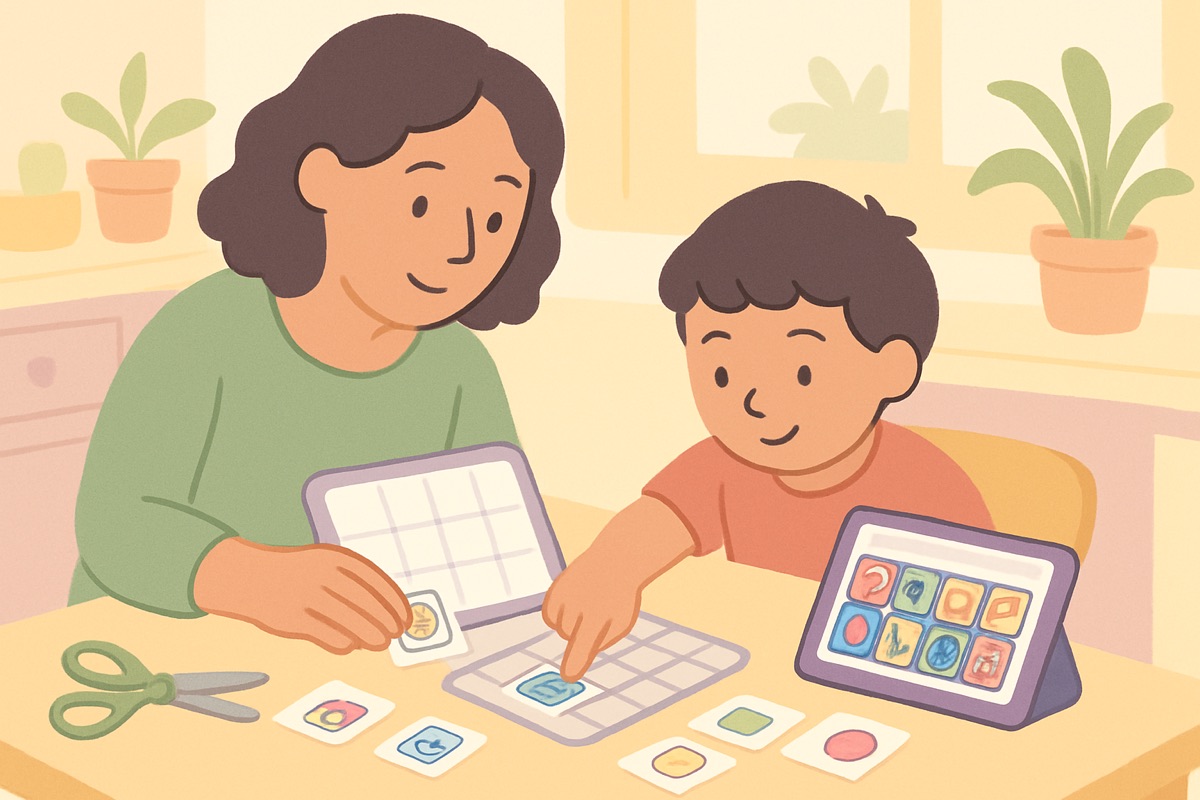
If you only ever make one situation-specific board, make it a mealtime board. Meals happen three times a day, the motivation is literally on the table, and the same words repeat every single time — which is exactly the repetition new communicators need.
What goes on it
Twelve to sixteen words, in four groups:
The foods that actually appear at your table. Not a food pyramid — your real rotation. The chicken nuggets, the applesauce, the one brand of crackers. Real photos work beautifully here; the actual cup beats a generic cup.
Actions and requests: more, want, drink, eat, open, help. “Open” is a quiet superstar — half of mealtime frustration is a sealed package.
Exits and refusals: all done, no, don’t like. A child who can tap “don’t like” doesn’t have to throw the plate to say it. This row prevents more meltdowns than any parenting hack we’ve tried.
A comment or two: yummy, yucky, hot. Comments turn ordering into conversation — and “yucky” gets gleefully overused, which is the point.
How to use it (the low-pressure version)
Put the board flat on the table where everyone can reach it — you included, because you’ll be its biggest user at first.
Model as you serve and eat. “More crackers?” — tap more. “That’s HOT” — tap hot. One or two taps per sentence, no ceremony. You’re narrating dinner with your finger.
Honor every tap instantly, even the inconvenient ones. Tap “all done” two bites in? That’s communication — acknowledge it (“All done? Two more bites, then all done”) rather than ignoring it. A board that gets overruled silently teaches that tapping is pointless.
Don’t gatekeep food behind the board. The fastest way to poison AAC is to hold the crackers hostage until your child taps the right symbol. Serve food like you always have; the board is an extra lane, not a toll booth.
Common bumps
- The board becomes a plate/frisbee/napkin. Normal. Laminate it, tape it down, or print a spare. Boards are consumables at first.
- Only “more” ever gets used. Fine — “more” is doing honest work. Keep modeling the others; range comes later.
- Grandma keeps quizzing. Gently reframe: “We just tap while we talk — no tests at this table.” (More on coaching relatives in Getting grandparents and babysitters using AAC.)
Making it
Paper and a marker genuinely work. If you want it faster — or want the board to speak — SpeakAnyWay can draft a mealtime board from a description (“picky 4-year-old, loves pasta, hates surprises”) in about a minute, and you swap in your real foods and photos from there.
Dinner tonight is a fine deadline. Imperfect board, real table, actual crackers — that’s the whole method.
Frequently asked questions
My child just taps 'cookie' over and over. Now what?
Celebrate — that's real communication doing real work. Honor it when you can, and when you can't, model the honest answer: 'cookie ALL DONE' or 'cookie LATER.' Boards aren't just for yes; they're how your child learns that no has words too.
Should the board stay on the table or come out only at meals?
Leave it where meals happen, permanently. A board you have to fetch is a board that stops getting used — and seeing it between meals invites practice at snack raids too.