Back-to-school AAC: setting up communication supports before day one
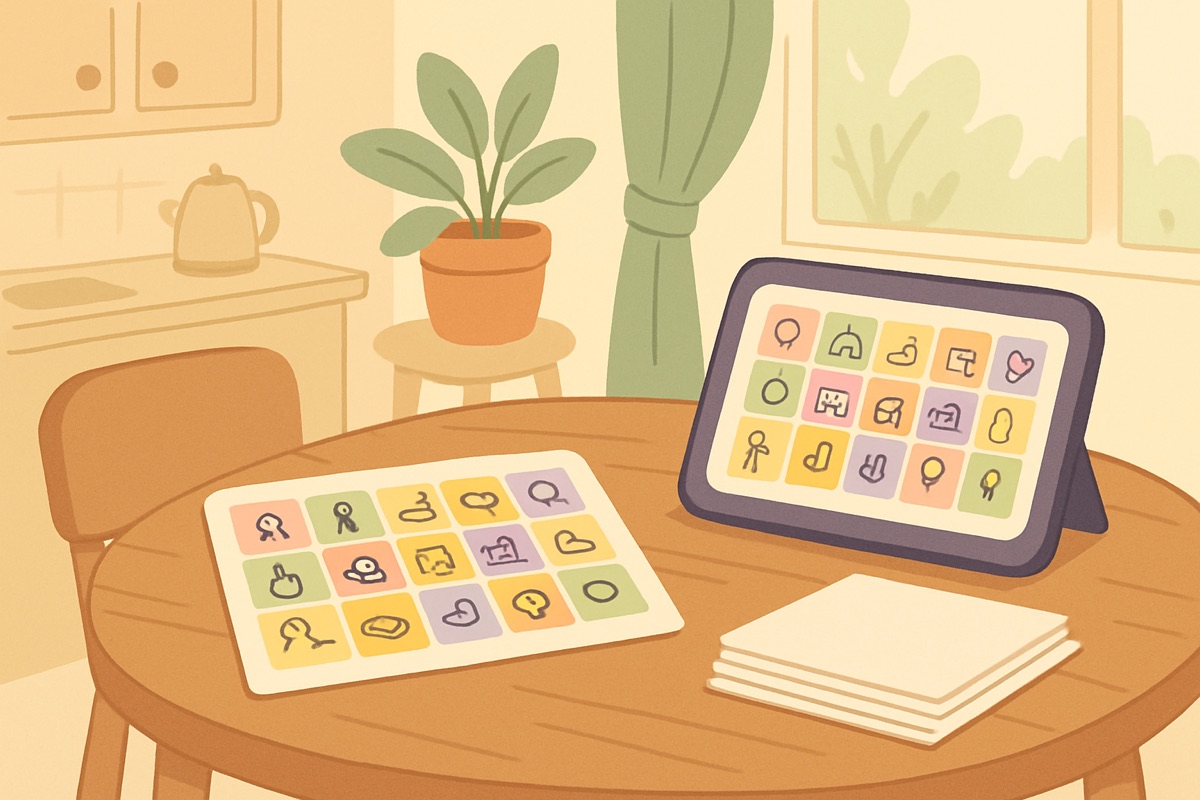
Every teacher knows the September truth: whatever systems exist on day one are the systems you’ll still be running in March, and whatever you meant to add “once things settle” mostly never arrives. Communication supports obey the same law. The classroom where AAC works all year is the classroom where it was on the walls before the first backpack hit a hook.
Here’s the August checklist.
1. Read the IEPs with a communication lens
Before day one, know: who arrives with an AAC system (app, device, boards), who has communication goals without a system, and who has neither on paper but “limited verbal output” scattered through the narrative — those students are your watch list. For arriving AAC users, contact last year’s team or the family now: what system, what are the greatest-hits words, what does the student do when frustrated? Twenty minutes of August phone calls prevents six weeks of September re-discovery.
2. Stage the room’s universal layer
The supports that serve every student go up before you know any of them:
- Core board at the teaching position — where you can reach it mid-instruction, because you’ll be its main user.
- Center boards in the centers, snack words at snack, a feelings board at the calm-down spot.
- Your lanyard board — bathroom, help, hurt, wait, water, line up — for the hallway, where communication needs follow you.
(Where to get all of these free.)
3. Load the year’s first vocabulary
Boards full of generic words meet a specific classroom. Before day one, add: staff names and photos (you, the para, the specials teachers), the schedule words for your day (circle, centers, specials, dismissal), and the first unit’s topic words. If your boards are digital, this is minutes — SpeakAnyWay can draft a topic board from a description, and photo tiles of the actual classroom staff beat any symbol set.
4. Brief every adult in the room
Your para will log more student-hours than you. Before the first bell, hand them the three habits (keep boards reachable, point while you talk, honor every tap) — live, two minutes, with a demo. Add the lunchroom and specials staff by week two; the cafeteria is where communication breaks down first, and where a working system pays off loudest.
5. Plan the first-week rituals
Day one, model the boards in front of everyone — “time to line up,” tap — so the tools are normal before they’re needed. Teach the feelings board to the whole class as a class tool, not one student’s equipment. And watch: the first week tells you which students gravitate toward the boards. That’s your signal to loop in the SLP early — a proper trial beats a December realization.
The payoff math
All of this is maybe one prep afternoon in August. The alternative is retrofitting communication supports in October, when routines have hardened, the frustrated student has a “behavior” reputation forming, and every change fights the classroom’s inertia. Same work either way — August just buys it at half price, and the student who walks in on day one to find their words already waiting learns the most important lesson of the year before lunch: this room speaks my language.
Frequently asked questions
I haven't met my students yet — how do I prep AAC without knowing their needs?
Prep the universal layer: core boards up, center boards placed, feelings board ready, your point-while-you-talk habit warmed up. That serves every student on day one. The individualized layer gets built in weeks one and two, once IEPs are read and the SLP conversation happens.
What's the single highest-value thing to do before day one?
Read the IEPs of incoming AAC users and get their existing boards into your room before the first morning. A student who arrives to find their words already on the wall learns everything they need to know about your classroom.