Trialing AAC with a student before anyone commits to a device
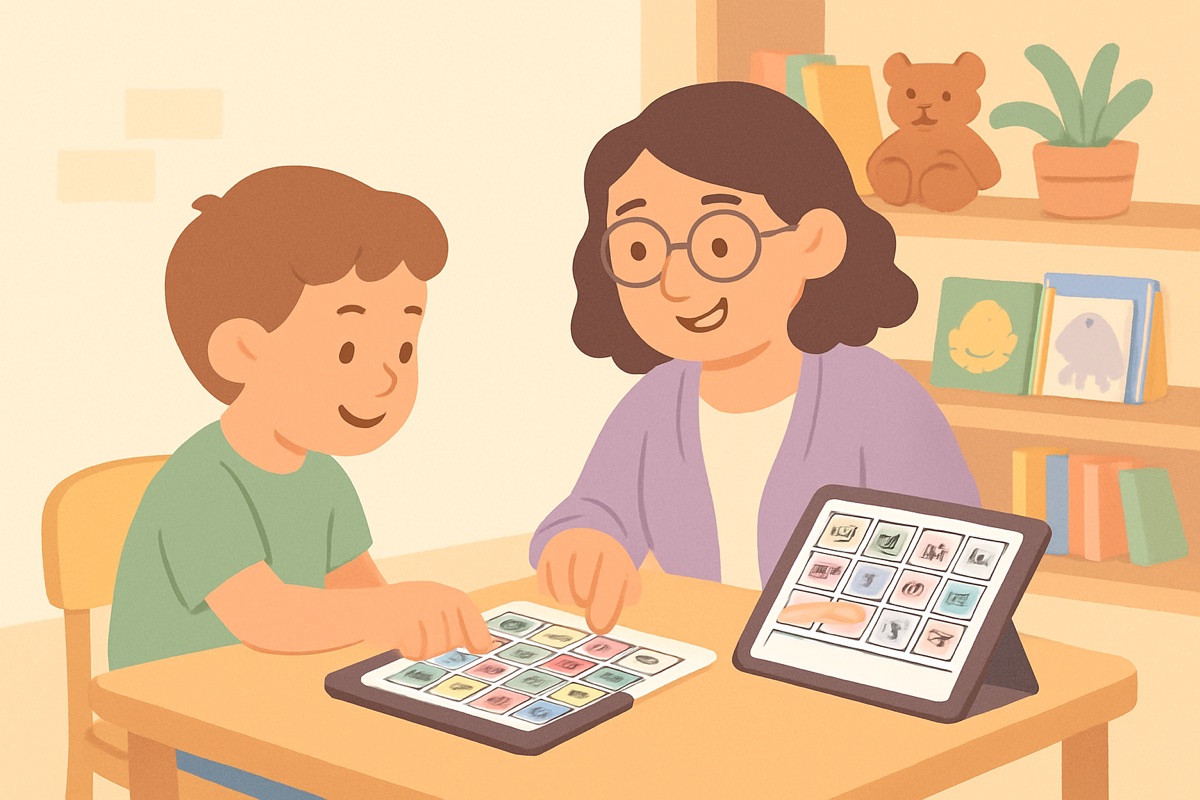
Every SLP has seen the failure mode: a device gets funded, arrives eight months later, and doesn’t fit — wrong access method, wrong vocabulary organization, a student who checked out before the paperwork cleared. The antidote is a real trial. Not a demo in your therapy room; a working trial in the student’s actual life.
What a trial is actually for
A trial isn’t an audition where the student proves they deserve AAC — no prerequisites, ever. It’s a fit test producing decision data: Does this vocabulary organization make sense to this student? Can they physically access it in a walker, on the rug, in the cafeteria line? Do the adults around them actually use it? What you’re deciding at the end is not whether the student gets AAC — it’s which AAC earns the long-term commitment.
Run it like you mean it
Set up before day one. Pre-load vocabulary that matters to this specific student — their people, their obsessions, their actual lunch choices — plus a core set. A trial on a generic default board tests the default, not the fit. Modern tools make this fast; SpeakAnyWay can draft boards from a description of the student’s day and runs on any device the school already has, which means the trial can start this week instead of after a purchase order.
Define success criteria up front, in writing. “Student initiates ≥N times daily across ≥2 settings by week 4; partners model ≥X times per activity.” Numbers you pick beat vibes you remember — and they protect the student from a trial being called early because week one was quiet.
Train the partners before you judge the student. The single biggest confound in AAC trials is adult behavior. If the para never models and the family leaves it in the backpack, you ran a trial of nothing. Spend the first week on partner habits (model while talking, honor every activation, keep it reachable), then start counting student data.
Cross settings deliberately. Therapy room, classroom, cafeteria, home. A system that only works in your office with you is a system that doesn’t work.
Read the results honestly
At the end, you have three honest outcomes: clear fit (commit and build), clear misfit (adjust one variable — access method, grid size, symbol set — and re-trial), or contaminated data (partners didn’t engage; fix that and extend). All three are useful. The only wasted trial is the one that ends in “he’s just not ready” — which, translated, almost always means we weren’t ready, and the student pays for it with another year of silence.
One more thing worth saying plainly: keep the family inside the trial, not informed about it afterward. They’ll be the ones living with the system — their buy-in during the trial predicts usage after it better than any metric you’ll chart. Hand them the home piece early (the handoff workflow is its own post), and the commitment decision at the end becomes one you make together.
Frequently asked questions
How long should an AAC trial run?
Long enough to outlast novelty and adult learning curves — for most students that's several weeks across multiple settings, not a single session. A one-session 'trial' mostly measures first-exposure behavior, which is the least predictive data you can collect.
What if the student ignores the system for the first two weeks?
Expected, especially if the adults are still learning to model. Track partner modeling alongside student use — if modeling was thin, the trial tested your team, not the tool. Boost the modeling before you call the result.
Sources
This is lived experience and research, not medical advice — your SLP knows your child.