My child got an AAC recommendation — now what?
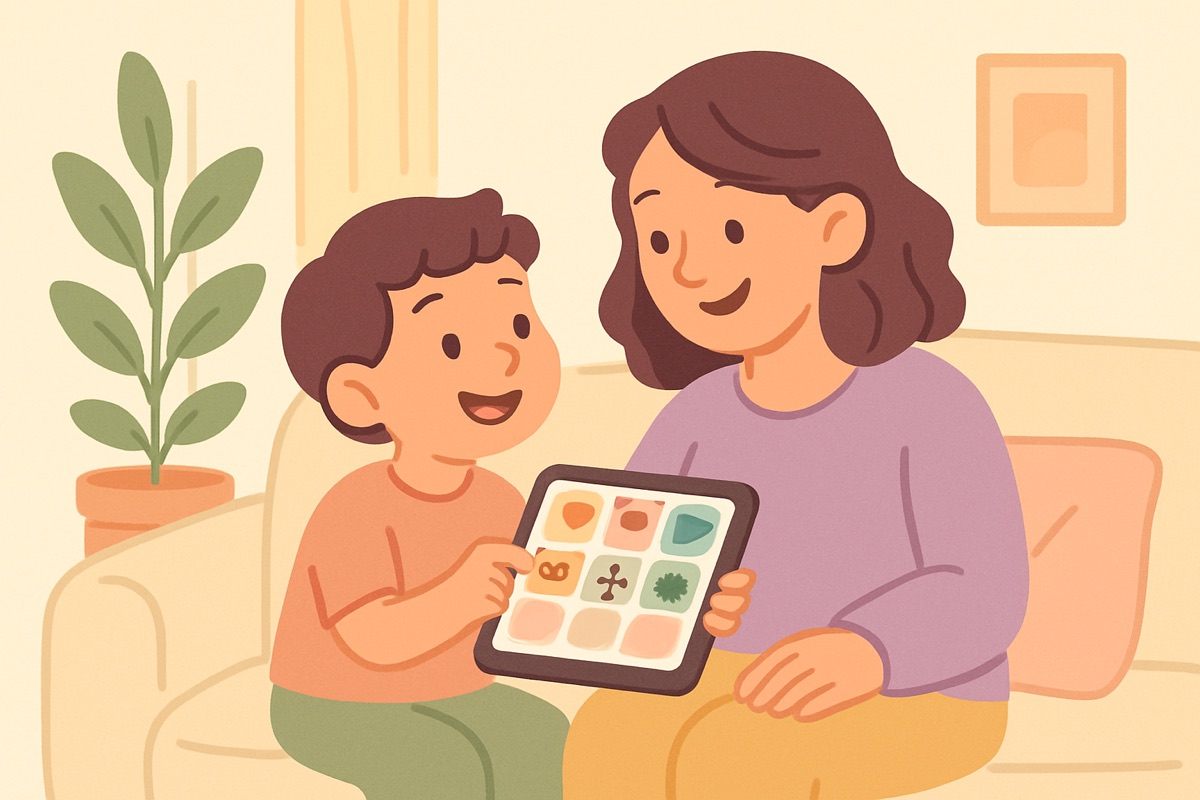
Maybe it came up at an IEP meeting, maybe after an evaluation, maybe as an aside from your child’s SLP (speech-language pathologist): “We think AAC would be a good fit.” And maybe you nodded along while your stomach did something complicated.
Let’s take the complicated feeling apart, then get practical.
What the recommendation means — and doesn’t
It means the team believes your child has more to say than their speech currently carries, and they want to give those thoughts a road out. That’s the whole message.
Here’s what it does not mean:
- It’s not giving up on speech. Research consistently shows AAC doesn’t hinder speech development — studies more often find gains. Speech goals don’t get cancelled; they continue alongside AAC.
- It’s not a verdict about the future. Some children use AAC for a season, some for life, and no one — including the evaluator — knows in advance. AAC keeps every path open while making today communicable.
- It’s not a judgment on what you’ve done. Getting here means the adults around your child noticed a need and acted. That’s the system working.
If grief shows up anyway, let it. You can be sad about the road you expected and still walk this one well — most of us AAC parents have done exactly that.
What usually happens next
Every district, clinic, and state runs this differently, but the shape is usually: an evaluation (if it hasn’t happened) to match your child with a system → a trial period with a device or app → then a longer-term plan, which might route through school, insurance or Medicaid funding for a dedicated device, or an app on hardware you already own.
Two things worth knowing about this stretch:
- It can be slow. Weeks to months is normal, and none of it is your fault.
- You’re a member of the team, not a spectator. You know what motivates your child and what a Tuesday evening actually looks like at your house. Say so in the meetings — good AAC decisions need that information.
Questions worth asking along the way: Who trains us as a family? What happens at home, not just at school? How do we add words as he grows? What do we do while we wait?
What you can do this week (don’t wait for the paperwork)
The best news in this whole post: the skills that make any AAC system work can start growing now, on whatever you have.
- Put symbols in your child’s world. A simple paper board, or a board app on the family tablet — a handful of useful words for one daily routine.
- Model. Tap the symbols as you speak — “time to eat,” tap eat — with no pressure on your child to respond. This is the single highest-value habit in AAC, and it’s fully in your hands.
- Respond to every attempt like it was intentional. Tap → thing happens. That lesson transfers to every device your child will ever use.
Nothing about starting now conflicts with the formal process — a child who already understands “symbols make things happen” walks into their device trial ahead.
The recommendation isn’t the scary part, it turns out. It’s the door. What’s on the other side is your child, telling you things.
Frequently asked questions
Does an AAC recommendation mean the team has given up on my child speaking?
No. It means the team wants your child communicating now rather than waiting on speech alone. Research shows AAC doesn't hinder speech development — speech goals and AAC almost always continue side by side.
Do we have to wait for the device or funding process before doing anything?
No — and you shouldn't. A paper board or an app on a tablet you already own can start building symbol skills this week. Everything your child learns transfers to whatever system arrives later.
Sources
This is lived experience and research, not medical advice — your SLP knows your child.