Modeling (aided language input): the 5-minute version
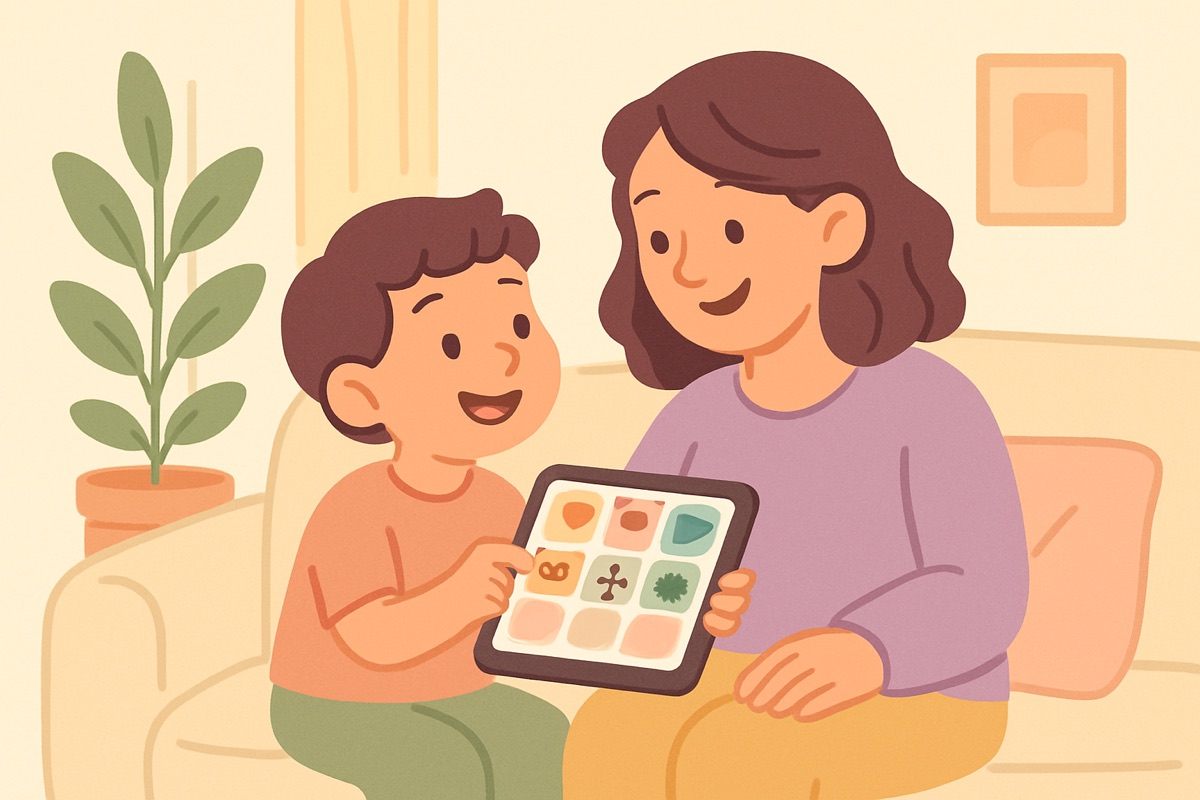
If you learn exactly one AAC skill as a parent, make it this one. Here’s the whole thing in one sentence:
Modeling means using your child’s board or device yourself, while you talk, without requiring anything back.
You say “time to eat!” and tap eat. You say “uh oh, it stopped” and tap stop. That’s it. That’s modeling. The clinical term is aided language input — “aided” because it uses the communication aid, “input” because it goes from you to your child, not the other way.
Why this works
Think about how speech arrived: your child soaked in something like a year of you narrating breakfast and singing in the car before anything came back out. Nobody called that wasted effort — it was the whole method.
Now hand a child a board full of symbols they’ve never seen anyone use. Expecting them to communicate with it is like expecting a first spoken word from a child who’s never heard speech. Modeling closes that gap: it’s how your child learns what the symbols mean, how tapping works, and — maybe most important — that using the board is a normal thing people do, not a chore assigned only to them.
The five-minute starter
- Pick one routine you already do daily. Snack, bath, getting dressed.
- Put the board where the routine happens. Modeling dies when the board lives in a backpack.
- Tap one or two words per sentence as you talk. “Want MORE?” — tap more. “All done!” — tap all done. Speak the whole sentence; tap only the key word.
- Expect nothing back. No “now you try,” no hand-over-hand, no quiz. You’re broadcasting, not testing.
- If they tap anything, respond like it was on purpose. Tap “drink” → drink appears. That instant cause-and-effect is the magic.
Five minutes a day, honestly done, beats an ambitious system nobody sustains.
What trips parents up
- Feeling silly. Tapping a board while talking to a child who doesn’t seem to watch feels absurd for a while. Do it anyway — you narrated to a newborn once, and this is the same act of faith.
- Modeling only requests. If the board only ever produces snacks, it becomes a vending machine. Model comments too: “wow,” “yucky,” “I like that.”
- Quitting at week three. The silence before a child’s first board use isn’t failure; it’s the same quiet before first words. Input accumulates even when nothing shows yet.
The mindset shift
Modeling quietly moves the job from your child to you — and that’s a relief, because you can control your half. You can’t make your child communicate today. You can make sure that every day, they watch someone they love show them how. Over time, that’s the thing that works.
Frequently asked questions
Do I have to model every word I say?
No — that's a fast track to burnout. Model one or two key words per sentence: say 'want MORE crackers?' out loud and tap just 'more.' Small and sustainable beats complete and abandoned.
How long until my child starts using the board back?
There's no fixed timeline, and honest answers beat hopeful ones: it can be days, weeks, or months. Children listen to speech for around a year before talking; symbol language deserves patience too. Keep modeling — input is never wasted.
Sources
This is lived experience and research, not medical advice — your SLP knows your child.