Getting the whole team — parent, aide, teacher — on the same board
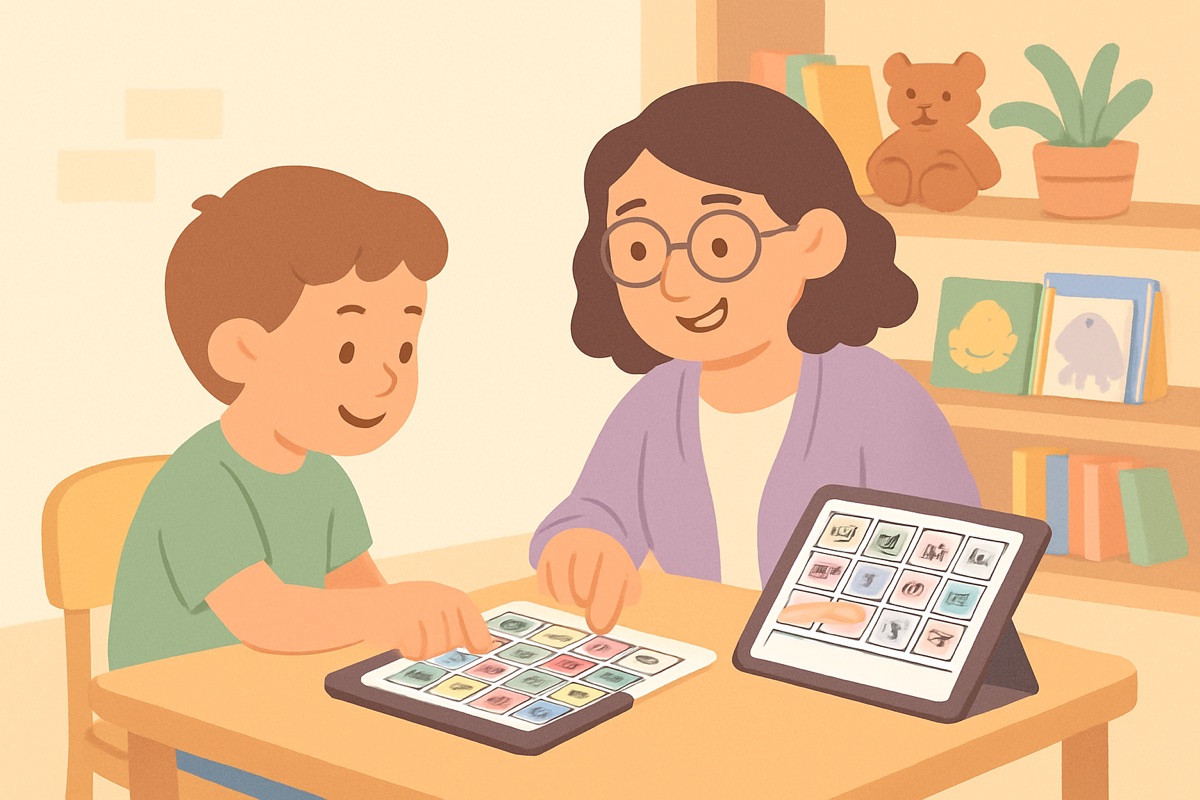
Picture the student’s day from inside. At school, “help” is a blue tile, bottom row of the classroom core board. In the therapy room it’s a different symbol, top right. At home it’s a paper board on the fridge with clip art from 2019 — when anyone remembers. Three systems, three geographies, one seven-year-old expected to be fluent in all of them.
We’d call that unreasonable for any other kind of literacy. The fix is alignment — and it’s more logistics than clinical complexity.
Alignment, in priority order
You rarely get to unify everything at once, so spend your capital in this order:
- Geography first. Same key words, same positions, everywhere. Even across different symbol sets or paper-vs-app, positional consistency preserves the student’s muscle memory — which is most of their fluency.
- Vocabulary second. The team draws from one shared word list, so the word the aide models at lunch is the word mom models at dinner. Keep a living list; the student’s new words should arrive everywhere at once.
- Symbols and system last. Nice when it happens; least valuable per unit of political effort. Don’t spend the family’s goodwill forcing a symbol-set migration before the team even shares a layout.
The mechanics that make it stick
One source of truth, visible to everyone. Version drift is the team killer — the aide’s printout is two revisions old, dad’s PDF is four. This is where shared digital boards quietly solve a decade-old problem: in SpeakAnyWay, the parent, the aide, and you are looking at the same board on whatever devices they already have, so Tuesday’s update is everyone’s update. Print paper copies from the same source and date-stamp them, so stale laminate identifies itself.
Distribute editing, keep auditing. You own the skeleton — layout, organization, core positions. Everyone else gets to add fringe the moment life produces it: the aide adds the new class pet, mom adds the cousin’s name before the weekend visit. You audit weekly. A board only the SLP can touch is a board that lags the student’s life by exactly one service interval. (This is the caseload-scale version of the same rule — see managing an AAC caseload.)
A two-minute weekly loop. One shared thread — “words he reached for and didn’t have? words he’s ignoring?” — from each setting. That’s your maintenance queue, sourced from the people who actually saw the moments.
One live norm-setting rep per adult. The three partner habits (keep it reachable, model while talking, honor every activation) transfer by demonstration, not memo. Ten minutes with the aide at the start of the year buys nine months of aligned modeling.
When the team resists
The teacher has her own visual system; grandma thinks the board is overkill; the outside clinic uses something else entirely. Don’t litigate tools — anchor on the one thing nobody can argue with: the student’s words should work everywhere they go. Then make the aligned option the easiest one in the room: boards already on their device, paper copies already printed, changes already synced. Teams follow the path of least resistance; your job is to pave it.
The student, meanwhile, gets the thing every speaking child takes for granted: a voice that means the same thing in every room.
Frequently asked questions
The classroom uses one symbol set and home uses another. Is that actually harmful?
It's friction, not catastrophe — but it's friction the student pays daily: same word, different picture, different location. Where you can't unify systems immediately, unify geography first: same key words in the same positions everywhere.
Who should own the board when multiple adults can edit?
Structure beats ownership: you own the core layout and organization; the team freely adds fringe (new interests, classroom nouns); you audit on a regular rhythm. Locking everything through you makes you the bottleneck — and bottlenecked boards go stale.
Sources
This is lived experience and research, not medical advice — your SLP knows your child.