Sub-friendly visual supports: what to leave in the sub folder
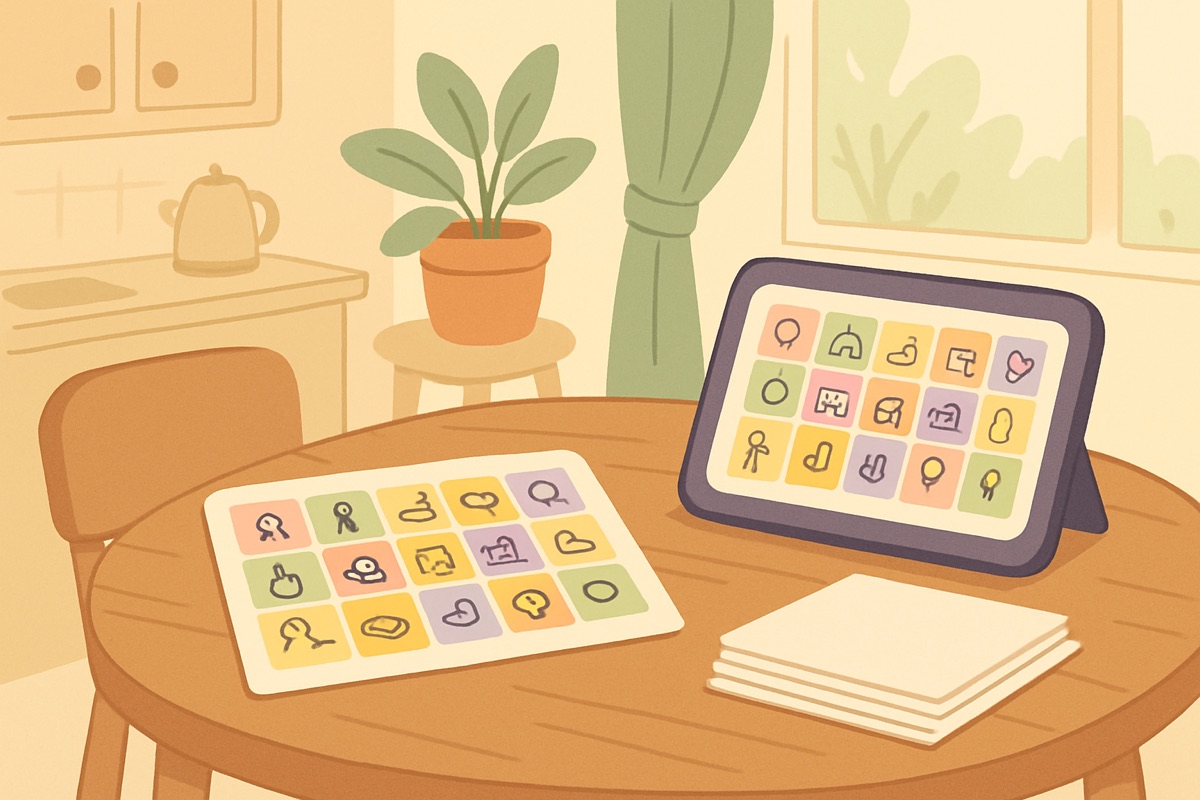
Substitute days are a perfect storm: the one adult who knows how each student communicates is gone, the routine is wobbling, and the students who depend on predictability are having their hardest day of the month — in front of a stranger who doesn’t know that the quiet kid in the blue chair has plenty to say.
You can’t teach a sub your classroom in a sticky note. You can build a sub folder where communication survives your absence. Here’s what goes in it.
Page one: the communication page
One page, laminated, first thing in the folder. Three parts:
The student notes — three lines each, only for students who need them:
Maya (blue chair): communicates with the board on her desk. Point to your words when you talk to her. If she taps it, that’s her talking — answer it.
No diagnosis, no history, no jargon. What the sub must do, not what the student is.
The three habits, verbatim: boards stay where students can reach them · point while you talk when you can · anything a student taps or points to counts as talking.
One sentence in bold: Never take away a student’s communication device, board, or tablet — it’s their voice, not a toy. This line earns its bolding; devices get confiscated by well-meaning subs every school year.
The board set
Copies of your classroom boards, stapled or ringed, living permanently in the folder (never the wall copies — those must stay on the walls):
- The general core board and the feelings board
- The schedule board for your actual day — the sub’s best de-escalation tool is being able to show what’s next
- The lanyard board (bathroom, water, help, hurt, wait, line up) — clip it to the folder so it physically ends up around the sub’s neck
- A first/then strip — first work, then break covers a remarkable share of hard moments
A printable set of these takes one prep period to assemble (free boards here), and the same files re-print in June when the folder comes back sticky.
The room map
A sticky-note-sized map: where boards live (front wall, art center, calm-down corner), which students have devices on their desks, where spare printed boards are. Subs don’t use supports they can’t find.
Sub-proofing the students’ side
The deeper insurance is teaching students that boards work with any adult, not just you. Point-while-you-talk in front of the whole class all year does this automatically — students who’ve watched the system work for every adult in the room will walk a confused sub through it themselves. More than one teacher has returned to a note saying “the little girl showed me how her board works.” That’s the system working exactly as designed.
The test
You’ll know the folder works the day you return and the notes say “no incidents” instead of a story about the student who “wouldn’t listen” — which was always, translated, a student who couldn’t be heard. One prep period buys that. Build the folder before the sick day picks its own date.
Frequently asked questions
Realistically, will a sub actually read any of this?
They'll read one page. That's why the communication page goes first in the folder and everything on it fits at a glance — three student notes, three habits, one map. The laminated boards work even for the sub who reads nothing, because the students know how to use them.
Should the sub use a student's speech device or app?
The student uses it; the sub just needs to not remove it and to treat its output as the student talking. Put that sentence in the folder verbatim — device confiscation by well-meaning subs is depressingly common, and one line prevents it.