What is AAC? A plain-English guide for parents
If you’ve just heard the letters “AAC” for the first time — maybe from a teacher, a pediatrician, or a late-night search — here’s the plain-English version.
AAC stands for augmentative and alternative communication. It’s an umbrella term for every way a person can communicate besides speaking: pointing to pictures, using gestures or sign, tapping symbols on a board, or using an app or device that speaks out loud. “Augmentative” means it adds to the speech someone has; “alternative” means it can stand in when speech isn’t there yet — or isn’t there today.
That’s it. AAC isn’t a brand, a therapy program, or a piece of equipment. It’s the whole toolbox.
What AAC actually looks like
AAC ranges from completely low-tech to high-tech, and most families end up using a mix:
- No-tech: gestures, facial expressions, sign language, leading you by the hand to the fridge. If your child does this, they’re already communicating — AAC builds on it.
- Light-tech: paper communication boards or books — a grid of pictures your child can point to. Cheap, durable, works in the bathtub.
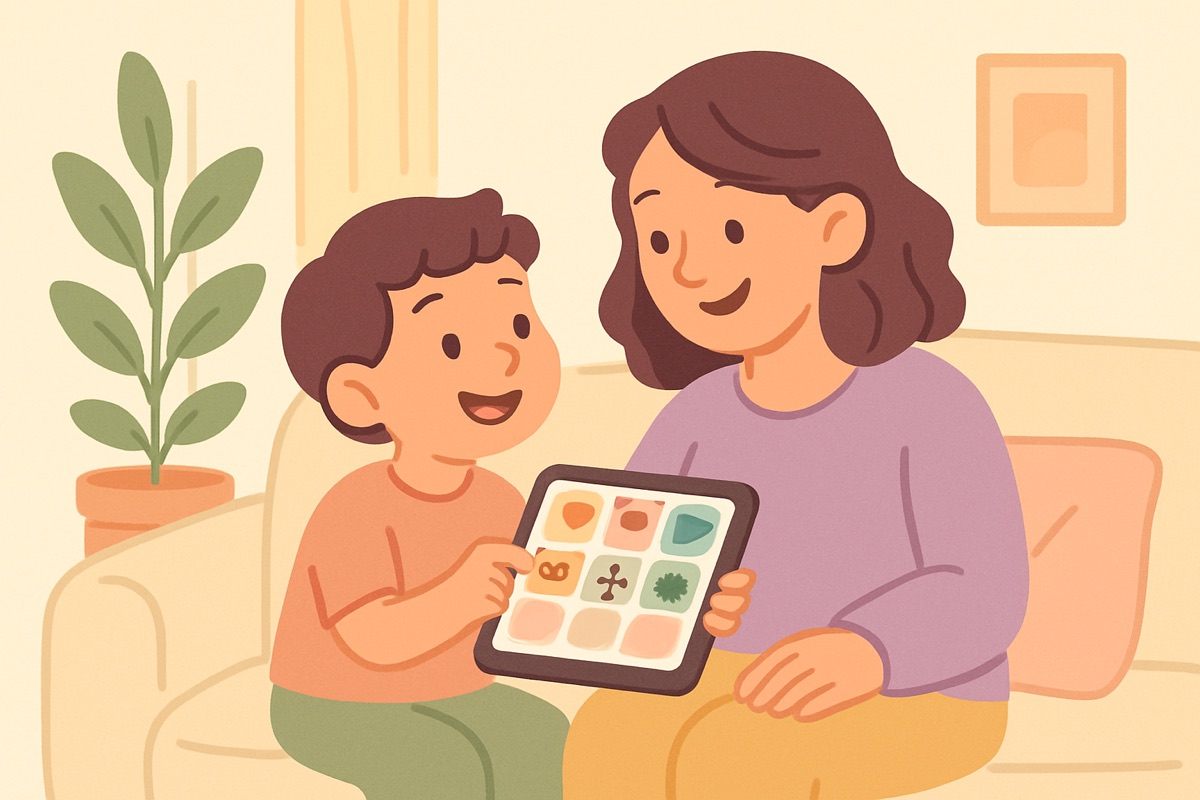
- High-tech: apps on a phone or tablet, or dedicated speech-generating devices, that speak a word or sentence when your child taps a symbol.
None of these is “better” than the others. The best AAC is the one your child can reach, understand, and actually use in real life.
Who AAC is for
AAC is for anyone whose speech doesn’t reliably meet their needs — including nonspeaking children, children with a few words, and children whose speech comes and goes with stress or fatigue. Some communicators use AAC for a season while speech grows. Some use it their whole lives. Both are wins, because the goal was never speech for its own sake — it’s your child telling you what they need, feel, and think.
One thing worth saying clearly, because so many families are told to wait: there are no prerequisites for AAC. No minimum age. No skills test. The research consensus is to start early and presume your child has things to say — because they do.
And no — AAC doesn’t stop speech
This is the fear that keeps the most families waiting, so it gets its own line: research reviews have consistently found that AAC does not stop speech from developing. In fact, studies more often show small speech gains after AAC is introduced. (We dig into this in Will AAC stop my child from talking?)
Where to start
Start smaller than you think: one simple board with a handful of genuinely useful words, used in one daily routine — snack time, bath time, the car ride. Point to the symbols as you talk (that’s called modeling, and it’s the single most useful habit you can build). Let your child see the board being used with zero pressure to perform.
You don’t need to have it all figured out. You need one board, one routine, and a little patience — and you can add everything else from there.
Frequently asked questions
Is AAC only for children who will never speak?
No. AAC supports communication for anyone who can't reliably say what they need right now — some communicators use it alongside growing speech, some use it for certain situations, and some use it as their main voice long-term. There's no rule that says using AAC means giving up on speech.
Does my child need to reach a certain age or skill level first?
No. There are no prerequisites for AAC — no minimum age, no test to pass, no skills to master first. Research and clinical guidance support starting as early as possible.
Sources
This is lived experience and research, not medical advice — your SLP knows your child.