Core words vs. fringe words, explained like a human
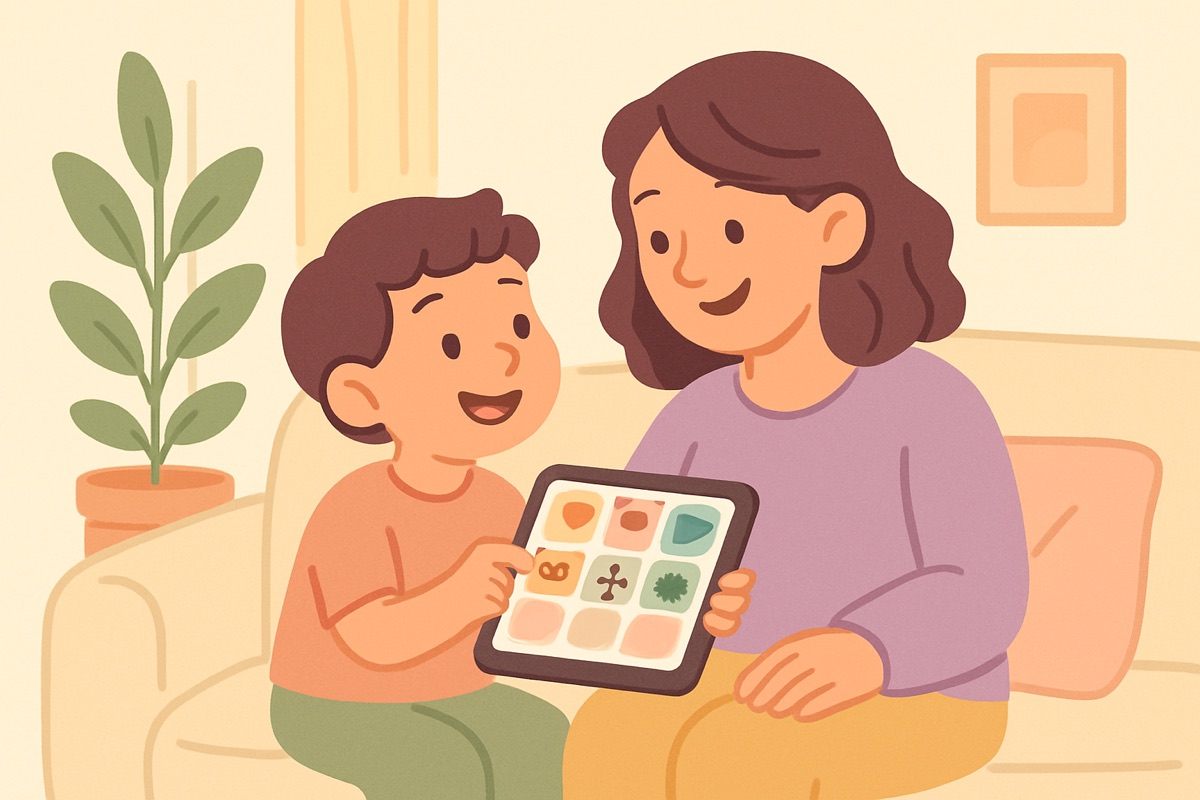
Spend ten minutes reading about AAC and you’ll hit the terms “core vocabulary” and “fringe vocabulary.” They sound technical. They’re not. Here’s the human version.
Core words: the little words that do everything
Core words are the small set of words we all use constantly, about almost anything. Words like: go, more, stop, want, help, that, not, like, put, all done. Researchers who count these things find that a few hundred core words make up the large majority of what any of us says in a day.
What makes them powerful is flexibility. “More” works for crackers, tickles, bubbles, and one more episode. “Stop” works on a swing, in a fight with a sibling, and when grandma’s hug goes too long. A child with twenty solid core words can say something in nearly any situation — including things nobody thought to program in.
Fringe words: the words that make it your child’s voice
Fringe words are the specific ones: dinosaur, applesauce, Bluey, grandma, trampoline. Each one only works in its own territory — you can’t use “applesauce” to negotiate bedtime — but that territory is where your child actually lives.
Fringe gets dismissed as less important because it’s less flexible. Don’t believe it. Fringe words are usually the motivating ones. A board that can say “go” but not “train” is, to a train-obsessed three-year-old, a board about nothing.
Why the mix matters
Picture a board that’s all fringe — forty food photos. Your child can order lunch like a tiny restaurant patron, but they can’t say “no,” “more,” “all done,” or “help.” Now picture all core — endlessly flexible, but nothing about dinosaurs, and so nothing worth saying.
The practical answer is the boring one: both. A useful starter pattern is a stable set of core words your child sees on every board, in the same spots (spot-memory is real — it’s how you type without looking), plus fringe words that rotate with the situation: meal words at meals, park words at the park.
What this means for you this week
- Keep core words in consistent positions as boards change — moving them is like re-scrambling the keyboard every morning.
- When you model, lean on core: tap “go” when the car goes, “stop” at the red light, “more” at snack. Same few words, many settings — that’s how their flexibility clicks.
- Add fringe generously for whatever your child loves right now. Loves and obsessions are not distractions from communication; they’re the fuel.
Core gives your child a grammar; fringe gives them their life. A good board carries both.
Frequently asked questions
Should my child's board be all core words?
No — you want both. Core words carry the grammar and flexibility, but fringe words carry your child's actual life: their people, foods, and obsessions. Motivating fringe words are often what make a child want to use the board at all.
My child only uses the board to ask for snacks. Is that a failure?
Not at all — requesting is usually the first job communication does, because it pays off instantly. Keep modeling other kinds of words (comments like 'wow,' protests like 'stop,' feelings like 'mad') and the range grows from there.
Sources
This is lived experience and research, not medical advice — your SLP knows your child.